How to Bleed Air Out of a Grease Gun
To bleed air from a grease gun, open its air bleeder while slowly pumping until grease comes out without bubbles. If it has no bleeder, follow the gun's manual for a safe priming method.
On this page (10 sections)
- How do you bleed air from a grease gun?
- What should you check before bleeding a grease gun?
- Why is a grease gun air locked after a cartridge change?
- What if the gun has an air bleeder valve?
- What if grease flows from the hose but not into the fitting?
- Could the grease or cartridge be causing the problem?
- When should you stop and inspect the grease gun?
- How can you prevent air from getting trapped again?
- How do you know the grease gun is bled?
- Frequently asked questions
To bleed air from a grease gun, open its air bleeder and pump slowly until grease flows without sputtering. If it has no bleeder, follow the gun's manual for an approved priming method.
Air can enter when you change a cartridge or load bulk grease. A trapped pocket may stop the gun from moving grease to the hose, even when the barrel looks full.
How do you bleed air from a grease gun?
Use the bleeder first if your gun has one. Follow your gun's manual for its specific steps.
- Point the hose away from your face and toward a rag or safe catch area.
- Open the air bleeder according to the manual.
- Pump the handle slowly until grease comes out steadily, without sputtering.
- Close the bleeder and test the gun with the hose pointed into the rag.
- Once grease flows evenly, reconnect the coupler to the fitting.
Don't keep pumping against a closed fitting to try to clear trapped air. That can make it harder to tell whether the problem is air, a blocked hose, or a fitting that won't accept grease.
How do you prime a grease gun without a bleeder?
If there's no bleeder, check the manual for the approved priming procedure. Don't loosen the head or barrel while the gun may be pressurized.
If the manual doesn't describe a procedure, contact the manufacturer for guidance. Do not pump against a fitting to try to release trapped air.
What should you check before bleeding a grease gun?
Check the cartridge, follower rod, and head connection first. A loading problem can look like an air lock, so confirm the grease is positioned to feed the pump.
For a cartridge-loaded gun, make sure the cartridge is seated and the follower rod is released from its loading position. If you're unsure about the steps, see how to change a grease gun cartridge without a mess.
For bulk loading, confirm the barrel is filled as the manufacturer directs and that the follower is engaged. Our guide to filling a grease gun with bulk grease covers that process.
Don't open the head while the gun may be pressurized. Point the hose away from people, keep your hands clear of the coupler outlet, and wipe away grease so you can see whether new grease is flowing.
Why is a grease gun air locked after a cartridge change?
A cartridge change can leave an air pocket between the grease and pump. Bleeding gives that air a path out so grease can reach the hose.
If the gun sputters or pumps air, open its bleeder and pump slowly. A steady stream of grease is a better sign that the pump is primed than a firm-feeling handle alone.
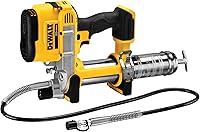
The DeWalt DCGG571B has an air-bleeder valve to assist with pump priming after cartridge changes. Its 42 in flexible hose can direct the outlet into a rag while you check the flow.
Don't assume every interruption means air is trapped. If bleeding doesn't restore flow, check whether the cartridge and follower are positioned correctly before taking the gun apart.
What if the gun has an air bleeder valve?
Open the valve only as directed by the gun's instructions, then pump until grease flows steadily. The DeWalt DCGG571B has an air-bleeder valve to assist with pump priming after cartridge changes.
Keep the hose outlet pointed away from your body. If the valve doesn't release air or the gun still won't pump grease, stop and check the manual rather than forcing the trigger.
For model-specific instructions, use the DeWalt DCGG571B support page.
What if grease flows from the hose but not into the fitting?
If grease reaches the hose but won't enter the fitting, the fitting or coupler may be the problem. Release the coupler and check that it is seated straight on the fitting before pumping again.
Don't force grease into a fitting that won't accept it. For a step-by-step fitting check, see how to grease zerk fittings.
If the fitting still won't take grease, why a grease zerk won't take grease explains other possible causes.
The LockNLube Locking Grease Gun Coupler has a 1/8 in NPT threaded connection and works with manual, battery, or pneumatic grease guns. Its thumb lever opens the jaws for attachment and removal.
Check that the coupler fits your gun's connection before replacing it. A different coupler won't fix air trapped in the pump.
Could the grease or cartridge be causing the problem?
Check that the grease is feeding from the cartridge or barrel before blaming the pump. A poorly seated cartridge or an incorrectly engaged follower can interrupt the flow.
Use grease that suits the equipment you're servicing. Lucas Oil Red N Tacky grease comes in 14 oz tubes and is described for agricultural, automotive, and industrial applications.
Grease type and loading method are separate questions: changing grease doesn't automatically clear an air lock. If the gun still won't prime after checking the cartridge and bleeder, read its manual for the correct loading sequence.
When should you stop and inspect the grease gun?
Stop if the handle binds, the head leaks, or grease still won't flow after bleeding. Don't keep pumping against a blockage or loosen parts while the gun may be pressurized.
Disconnect the coupler from the fitting before checking the hose or outlet. Wipe away excess grease and look for a loose connection, damaged hose, or blockage that needs attention.
A clean gun is easier to inspect for leaks and buildup. Follow how to clean a grease gun for routine care, and check the tool's manual before removing parts.
How can you prevent air from getting trapped again?
Load the gun carefully and bleed it after a cartridge change if needed. Follow the same loading method each time so the follower and grease feed into the pump as intended.
Keep the hose outlet pointed into a rag during a priming check. That lets you see whether grease is flowing before you reconnect the coupler to a fitting.
Choose a gun with a loading or priming feature that fits your needs. The Lincoln 1133 supports two-way loading, while the DeWalt DCGG571B has an air-bleeder valve to assist with priming after cartridge changes.
How do you know the grease gun is bled?
The gun is bled when it delivers a steady flow of grease without sputtering. Test the flow into a rag before attaching the coupler to the fitting.
If it still pumps air, repeat the bleed steps once and recheck the loading setup. For a grease gun that continues to lose prime or won't pump, stop and inspect the connections or contact the manufacturer for help.
When deciding how to bleed air from a grease gun, use the bleeder if available and follow the manual for other priming methods. If grease flows from the hose but not the fitting, check the coupler and fitting next.
Frequently asked questions
Why is my grease gun air locked?
A grease gun may be air locked when air sits between the grease and pump, often after changing or loading a cartridge. Open the bleeder if the gun has one, then pump slowly until grease flows steadily.
If that doesn't work, check that the cartridge is seated and the follower is released.
How long should I pump a grease gun to bleed it?
Pump slowly until grease flows without sputtering or visible air bubbles. The number of strokes varies with the gun, how much air is trapped, and how it was loaded.
Stop if the handle binds or the gun won't build pressure, then check the loading instructions before continuing.
Can I bleed a grease gun without an air bleeder?
Use the gun's manual to find its approved priming procedure if it has no bleeder. Do not loosen the head or barrel while the gun may be pressurized.
Why does my grease gun still not pump after bleeding?
If grease still won't flow, check whether the cartridge is installed correctly, the follower rod is released, and the grease is reaching the pump head. A blocked fitting, damaged coupler, or clogged hose can also stop flow.
Disconnect from the fitting before checking the hose or coupler.