How Often Should You Grease Ball Joints?
Grease ball joints at the interval in your vehicle's maintenance schedule; there is no single mileage rule for every vehicle. Check whether each joint has a grease fitting, since many modern joints are sealed and don't need routine greasing.
On this page (8 sections)
- How often should you grease ball joints?
- Do all ball joints need grease?
- How can you tell when a ball joint needs attention?
- What if the joint won't take grease?
- How much grease should you add?
- What grease and tools do you need?
- What should you do if a ball joint is sealed?
- How often should you grease ball joints on your vehicle?
Grease ball joints at the interval in your vehicle's maintenance schedule, if they have grease fittings. There is no one mileage rule for every vehicle, and sealed ball joints generally don't need routine greasing.
Check your owner's manual or service information before you start. The joint's design and the vehicle maker's instructions determine whether it needs grease and how often.
How often should you grease ball joints?
Follow the service interval for your specific vehicle and ball joints. Some serviceable joints have a stated interval, while sealed joints are designed without a routine grease fitting.
Don't use a generic mileage target as a substitute for the manual. If the maintenance schedule doesn't clearly cover the joint, look up the component maker's instructions or ask a qualified mechanic to identify the part.
Driving conditions can affect maintenance needs, but don't invent a shorter interval without guidance. If you use the vehicle for heavy work or in harsh conditions, check whether its service schedule has a separate recommendation.
Do all ball joints need grease?
No. Only grease ball joints that are designed to be serviced.
A zerk fitting, also called a grease fitting, usually signals a service point; a sealed joint may not have one.
Never drill a hole or add a fitting to a sealed joint to force grease into it. If you can't identify the joint, check the vehicle's service information or have a mechanic inspect it.
A damaged dust boot is a separate concern. Greasing through a fitting won't repair a torn boot or fix a worn or loose joint.
How can you tell when a ball joint needs attention?
Look for damage or looseness, and have a questionable joint inspected. A torn boot, visible grease loss, unusual movement, or a noise from the suspension can point to a problem that needs more than routine lubrication.
Visual checks can't confirm that a ball joint is safe. Use the vehicle maker's inspection method, or ask a qualified mechanic to check for wear and play.
Don't keep driving on a joint that appears badly damaged or loose. Ball joints are part of the suspension and steering system, so get a professional assessment if you're unsure.
How do you grease a ball joint with a fitting?
Use the correct grease and add it slowly through the fitting. Clean around the zerk first so dirt doesn't get pushed into the joint, then connect the coupler securely.
Pump in small amounts and watch the boot. Stop if it begins to swell, and don't keep pumping just because the gun can deliver more grease.
Our step-by-step guide to greasing zerk fittings covers fitting preparation and safe grease-gun use. If the fitting won't accept grease, see why a grease zerk won't take grease.
What if the joint won't take grease?
Stop pumping if grease won't enter the joint. A blocked fitting, a coupler that isn't seated, or a problem inside the joint could be the cause.
Don't force high pressure into the fitting or keep pumping against resistance. Check the fitting and coupler, then follow the vehicle or component maker's service instructions.
Read how to troubleshoot a zerk that won't take grease before trying again. If the joint still won't accept grease, have it inspected.
How much grease should you add?
Add only the amount needed to lubricate the joint, and stop before the boot distends. The right amount depends on the joint, so use its service instructions when they specify a quantity or method.
A grease gun's output can vary with the tool and how you operate it. Our guide to how much grease comes out in one pump explains why counting pumps isn't a precise measure by itself.
The LockNLube Locking Grease Gun Coupler fits SAE and metric zerk fittings and is rated up to 10,000 psi. Its thumb lever opens the jaws for removal, including under pressure.
A coupler's pressure rating doesn't mean you should apply that pressure to a ball joint. Use the vehicle's service instructions and stop if the boot starts to expand.
What grease and tools do you need?
Use the grease and equipment that match the joint and its service instructions. Don't pick grease based only on a high temperature rating or a general heavy-duty label.
Mystik JT-6 is recommended for uses such as disc brake wheel bearings, backhoe hinge pins, and conveyor bearings. Those uses don't mean it's right for your ball joints, so confirm compatibility first.
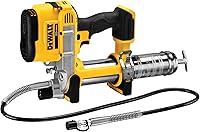
Its jam-proof toggle mechanism, cast pump head, and heavy-duty follower springs are among its listed features. Use the gun with the grease and service method specified for your joint.
For a riding mower, grease intervals and points vary by machine. Our guide to how to grease a riding mower or lawn tractor explains how to check that equipment's instructions.
What should you do if a ball joint is sealed?
Don't try to grease a sealed ball joint. Follow the vehicle's inspection and replacement guidance, and have the joint checked if you notice damage, looseness, or unusual noise.
A sealed design doesn't mean the joint can never wear out. It means routine grease service isn't done through a fitting.
How often should you grease ball joints on your vehicle?
For the question of how often to grease ball joints, start with the vehicle's service schedule and confirm that the joint is serviceable. If it has no grease fitting, don't force grease into it.
For a serviceable joint, follow the maker's interval, use the specified grease, and stop when the boot begins to swell. See how to grease a zerk fitting for the next step, or have a mechanic inspect the joint if its condition is unclear.
Frequently asked questions
How often should you grease ball joints?
Use the interval in your vehicle's maintenance schedule if the ball joints have grease fittings. The interval varies by vehicle and joint design, so check the owner's manual or service information rather than relying on a universal mileage estimate.
Sealed joints generally aren't serviced with grease.
Do ball joints need to be greased?
Some ball joints need periodic greasing through a zerk fitting, while sealed joints don't have a service fitting and aren't meant for routine greasing. Check the vehicle's maintenance information and inspect the joint before choosing a grease or service interval.
Can you over-grease a ball joint?
Yes. Pumping too much grease can damage a joint's seal or boot, especially if the boot swells or splits.
Add grease gradually and stop if the boot begins to expand; follow the vehicle or component maker's instructions for the correct amount.
What grease should you use on ball joints?
Use the grease grade and type specified by your vehicle or ball-joint maker. Don't assume that a grease labeled for high temperatures or heavy service is suitable for every joint.
Avoid mixing greases unless the manufacturer says they are compatible.