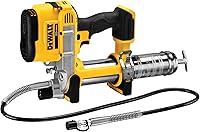
DeWalt DCF900B Review: 1/2-Inch Impact Wrench (November 2026)
The DeWalt DCF900B is a strong buy for heavy fastening, with 1030 ft-lbs of fastening torque, 1400 ft-lbs of breakaway torque and four speed settings. Skip it if you mostly drive small bolts, because its 6.4 lb tool-only weight is built for big jobs.
On this page (8 sections)
The DeWalt DCF900B is a strong buy for heavy fastening, and this DeWalt DCF900B review looks at whether its torque, weight and controls fit the work you actually do. It brings 1030 ft-lbs of max fastening torque and 1400 ft-lbs of max breakaway torque to a 1/2-inch drive, plus four speed settings and the Precision Wrench control mode.
For wheel lugs, pipe flanges and concrete anchors, that combination is hard to argue with. For light assembly and small bolts, it's more tool than the job needs.
The short answer: buy it if you loosen and tighten big fasteners regularly and already own DeWalt 20V MAX batteries. Skip it if your work is mostly small bolts or overhead, where 6.4 pounds starts to feel heavy.
The rest of this review breaks down the specs, the settings, the care routine and the honest trade-offs.
The DeWalt DCF900B at a glance
The DCF900B is a high-torque 1/2-inch impact wrench sold as a bare tool, and DeWalt built it for demanding construction, automotive and farming tasks. The brushless motor feeds a Hog ring anvil and an on-tool LED light, and a four-mode push button switch moves you between speed settings.
It's 8.43 inches long and weighs 6.4 pounds without a battery.
DEWALT 20V MAX Cordless Impact Wrench: Best for heavy fastening

- 1030 ft-lbs max fastening torque
- 1400 ft-lbs max breakaway torque
- Four-mode speed settings
- Brushless motor with Hog ring anvil
- Tool only, battery sold separately
A high-torque 1/2-inch impact wrench for wheel lugs, pipe flanges and concrete anchors. The four-mode control and Precision Wrench setting give you real command over big fasteners.
Pros
- 1030 ft-lbs of fastening torque and 1400 ft-lbs of breakaway torque
- Four speed settings with a variable speed trigger
- Precision Wrench helps prevent overtightening and run-off
- On-tool LED light for dark work areas
- Battery guard absorbs shock at the battery connection
Cons
- 6.4 lb tool weight wears on you overhead
- Battery and charger sold separately
- More torque than most light jobs need
The tool itself is what's in the box: one DCF900 impact wrench. DeWalt sells the 20V MAX battery and charger separately, so the real cost depends on what's already in your shop.
If you're already on the 20V MAX platform, this is a natural addition rather than a new system.
The headline numbers are what separate it from mid-tier impact guns. Breakaway torque is the force it can summon to crack a rusted or over-torqued nut loose.
Fastening torque is what it delivers when you're tightening. At 1400 and 1030 ft-lbs respectively, it sits in the class that handles lug nuts and large flange bolts without straining.
The motor is the other part worth knowing. A brushless design has fewer wearing parts than a brushed motor, and DeWalt pairs it with the battery guard, a shock-absorbing connection between the pack and the tool.
On a gun that hits this hard, that cushion takes the shock away from the battery terminals. The model number is DCF900B and the tool carries DeWalt's 3-year limited warranty on materials and workmanship.
Who the DeWalt DCF900B suits
This wrench suits you if your fastening jobs are big, stubborn or repeated, such as wheel lugs on a truck, grooved couplings on a pipe run or anchor bolts into concrete. Those are the tasks DeWalt names, and they're where the torque and the 1/2-inch drive earn their keep.
A mechanic working on suspension and chassis bolts will also get good use from it.
It also fits anyone already invested in DeWalt 20V MAX batteries. Buying a bare tool means no duplicate charger, no extra packs and one battery platform across your tools.
That's the practical reason to pick this model over a kit from another brand.
Skip it if your main need is light assembly, furniture bolts or small engine work. A 1/2-inch high-torque gun is heavy and overpowered for fasteners that a 3/8-inch tool or a ratchet handles fine.
If you're weighing a hand tool against power for lighter jobs, our Craftsman V20 ratchet review covers a compact option in that space.
There's also a middle group to think about: the home mechanic who does a handful of brake and suspension jobs a year. For that buyer the DCF900B works, but the weight and the bare-tool cost only pay off if the jobs keep coming.
If the tool sits in a drawer most months, the same money buys a lighter wrench plus batteries you'll actually use.
Specs that matter in daily use
The torque, weight and control settings decide whether the DCF900B feels right in your hands day after day. Torque gets the headline, but the four-mode switch and the LED light shape how the tool behaves on a real job.
| Spec | DeWalt DCF900B |
|---|---|
| Max fastening torque | 1030 ft-lbs |
| Max breakaway torque | 1400 ft-lbs |
| Drive size | 1/2 in |
| Anvil type | Hog ring |
| Motor | Brushless |
| Speed settings | 4 modes, variable speed trigger |
| Control mode | Precision Wrench |
| Length | 8.43 in |
| Weight | 6.4 lb (tool only) |
| Power | DeWalt 20V MAX battery (sold separately) |
| Warranty | 3 years, limited |
The four-mode switch is the feature you'll touch most. Low modes let you start a nut without spinning it across the shop floor, and the top mode gives you full torque for the final tighten.
A variable speed trigger adds finer control within each mode.
Precision Wrench is the safety net. It helps prevent overtightening in forward and run-off in reverse, so you don't shear a stud or send a nut flying.
For critical fastening, that's worth more than raw torque alone. The LED light matters too when you're working under a hood or in a dim bay.
Battery guard is a shock-absorbing connection between the pack and the tool, which DeWalt says reduces wear and tear on the battery.
The drive is measured in SAE inches, so sockets are the inch sizes you already own rather than a metric set. The housing is plastic in black and yellow, and DeWalt says the build resists common solvents.
Setting up the DCF900B for your work
Start by matching the mode to the fastener, not to the biggest number on the dial. Before you touch a critical bolt, practice on a scrap fastener at each setting so you know how the trigger responds.
The four modes behave differently, and knowing where full torque kicks in prevents surprises.
Fit the right impact-rated socket to the Hog ring anvil. The ring holds the socket with spring pressure, so push it on firmly and check it seats before you run the tool.
Standard chrome sockets aren't made for impact use; impact sockets are the safe pairing.
Charge a 20V MAX battery and slide it on until the battery guard seats. Because the tool ships bare, confirm your pack is compatible with the DCF900 before you plan a job around it.
DeWalt sells batteries in several capacities, and a larger pack adds runtime but also weight.
Set the LED brightness to suit your workspace using the mode button. Then run a test on a loose nut to feel the trigger and the Precision Wrench response before you move to the actual work.
A minute of practice saves a stripped thread later.
The variable speed trigger is worth a few passes on its own. Squeeze it slowly and you can walk a nut down most of a thread before the gun starts hammering.
Save the full pull for the last turn, when the fastener needs the breakaway or fastening torque the DCF900B was bought for.
Care and safe use in the shop
Keep the DCF900B working by treating the battery connection and the anvil as the parts that need attention. Wipe the tool down after jobs in dusty or oily environments, since DeWalt says the build resists common solvents but grime still works into the anvil and vents.
Check the Hog ring now and then. If sockets start slipping off, the ring may be worn, and a replacement keeps the drive secure.
Keep sockets clean and free of grit so they seat fully.
Store the tool with the battery removed if it won't be used for a while. That protects the pack and keeps the battery guard from sitting under load.
Follow DeWalt's guidance on battery storage temperature and charging.
Use impact-rated accessories and eye protection every time. A high-torque gun can snap a fastener or throw a socket, so keep your stance clear of the drive line.
Don't use the tool as a breaker bar or pry bar; the anvil and housing aren't built for side loads. For torque-critical fasteners like wheel lugs, finish with a torque wrench rather than trusting the gun's setting.
Keep the vents clear too. The brushless motor needs airflow to stay cool during long runs of flange bolts or lug nuts.
If you're working in sawdust or metal shavings, blow the vents out in the end so the motor isn't pulling debris through the housing.
The trade-offs to weigh before buying
The main trade-off is weight against capability. At 6.4 pounds bare, the DCF900B is heavy, and it gets heavier with a large battery attached.
For lug nuts at ground level that's manageable. For long sessions overhead or at shoulder height, your arms will feel it, and a lighter 3/8-inch wrench becomes the smarter pick.
The second trade-off is the bare-tool format. No battery and no charger in the box means the true cost depends on what you own.
On the 20V MAX platform that's an advantage. Starting fresh, you'll add packs and a charger to the bill.
The third is that the tool is more than many jobs need. Four modes and 1030 ft-lbs of fastening torque are wasted on small bolts, and the size makes it awkward in tight engine bays.
If most of your work is light, a compact impact driver or a 3/8-inch gun does the job with less bulk.
Finally, the plastic housing is fine for worksite use, but it won't hide scratches. That's cosmetic and doesn't affect performance.
The 8.43-inch length also puts the drive further from your hand than a compact gun, which matters when you're reaching past a fender or between frame rails.
Alternatives worth a look
If the DCF900B isn't quite the right fit, three other tools cover different needs: a lighter 1/2-inch option from another platform, a compact ratchet for tight spots and a grease gun for maintenance work alongside your impact jobs. Each one solves a problem the DCF900B doesn't.
Ryobi vs DeWalt for a lighter 1/2-inch gun
If you're not already on the DeWalt platform, the battery system is the deciding factor. Our Ryobi vs DeWalt grease gun comparison walks through how the two brands differ on platform value and tool range.
That reasoning carries over to impact wrenches: pick the platform you'll build around, then buy the bare tool that fits it.
A compact ratchet for tight spaces
When the DCF900B won't fit, a cordless ratchet takes over. The Craftsman V20 ratchet review covers a compact tool for engine bay and interior work where a full-size impact gun can't reach.
It's slower than an impact wrench, but it gets into places the DCF900B can't.
Grease guns for maintenance alongside your impact work
If you maintain equipment as well as fasten it, a grease gun belongs in the same bag. Our Milwaukee M12 grease gun review looks at a cordless option for routine lubrication.
And if you're choosing between DeWalt's own grease guns, the DeWalt grease gun 571 vs 581 comparison lays out the differences.
Verdict: buy or skip the DeWalt DCF900B?
Buy the DeWalt DCF900B if you regularly break loose and tighten big fasteners and you're already on the 20V MAX battery platform. The 1400 ft-lbs of breakaway torque, 1030 ft-lbs of fastening torque and four speed settings make it a capable tool for wheel lugs, pipe flanges and concrete anchors.
Precision Wrench and the LED light add control and visibility that matter on real jobs. At 9.7 out of 10, it's the pick for heavy fastening in this review.
Skip it if your work is mostly small bolts or overhead, where 6.4 pounds and 1/2-inch bulk work against you. A lighter 3/8-inch wrench or a cordless ratchet is the better fit there.
And if you don't own DeWalt 20V MAX batteries, price the packs and charger in before you commit.
Our score weighs specs, features and how well the tool fits what a high-torque impact wrench buyer wants. For most people doing heavy fastening on the DeWalt platform, this DeWalt DCF900B review lands on a clear buy.
Frequently asked questions
How much torque does the DeWalt DCF900B have?
DeWalt rates it at 1030 ft-lbs of max fastening torque and 1400 ft-lbs of max breakaway torque. That puts it in the high-torque class, aimed at wheel lugs, pipe flanges and concrete anchor bolts rather than small assembly work.
Does the DeWalt DCF900B come with a battery?
No. It ships as a tool-only kit with just the DCF900 impact wrench, so you need a DeWalt 20V MAX battery and charger you already own.
If you're starting from nothing, price the battery and charger into your decision.
What is Precision Wrench on the DeWalt DCF900B?
Precision Wrench is a control mode that helps prevent overtightening when you drive a fastener forward and run-off when you loosen one. DeWalt includes it for critical fastening tasks where an impact gun's full torque would be too much.
Is the DeWalt DCF900B too heavy for everyday use?
At 6.4 pounds as a bare tool, it's on the heavy side for long overhead sessions. For lug nuts and chassis work close to the ground it's fine.
If most of your fastening is small bolts at shoulder height, a lighter 3/8-inch wrench makes more sense.
What warranty does DeWalt give the DCF900B?
DeWalt backs it with a 3-year limited warranty on materials and workmanship. Keep your receipt and the model number, and read the coverage terms so you know what service looks like in your area.
What is the Hog ring anvil on this impact wrench for?
The Hog ring anvil holds sockets with a spring ring instead of a pin detent. That makes socket changes quicker with one hand, which matters when you're swapping sizes on wheel lugs or a run of flange bolts.