Makita XRW01Z vs Milwaukee 2566-20 Ratchet: Which Is Better? (November 2026)
The Milwaukee 2566-20 is the better overall pick for fast 1/4-inch work, while the Makita XRW01Z suits users who need 2 drive sizes. The makita xrw01z vs milwaukee 2566-20 choice comes down to speed, torque, battery platform and socket flexibility.
On this page (10 sections)
- What separates the Makita and Milwaukee ratchets?
- Which ratchet is faster in daily work?
- Which ratchet has more torque?
- Does drive size matter more than speed?
- How do the battery platforms change the choice?
- Which tool is easier to handle in tight spaces?
- What control features help with fastening?
- Who should buy the Milwaukee 2566-20?
- Who should buy the Makita XRW01Z?
- Makita XRW01Z vs Milwaukee 2566-20: which wins?
The Milwaukee 2566-20 wins overall for fast 1/4-inch fastening, while the Makita XRW01Z wins for drive-size flexibility. In the makita xrw01z vs milwaukee 2566-20 comparison, Milwaukee has the higher torque score and lower tool weight, while Makita covers both 3/8-inch and 1/4-inch sockets.
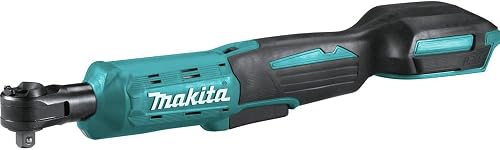
The Milwaukee is a 12V M12 FUEL cordless ratchet with a 1/4 in drive, up to 40 ft-lbs of torque and a maximum rotational speed of 450 rpm. The Makita is an 18V LXT cordless ratchet with interchangeable 3/8 in and 1/4 in anvils, 35 ft-lbs of torque and variable speed from 0 to 800 rpm.
We compared the stated drive sizes, speed, torque, weight, battery systems and included adapters. The best choice depends on the sockets already in your tool kit and the work you do most often.
 Best for fast 1/4-inch fastening
Milwaukee 2566-20 M12 FUEL 1/4-inch High Speed Ratchet
What separates the Makita and Milwaukee ratchets?
Milwaukee is the focused 1/4-inch speed tool, while Makita is the more flexible 2-drive ratchet. Their headline numbers point to different priorities rather than the same design.
| Feature | Milwaukee 2566-20 | Makita XRW01Z |
|---|---|---|
| Drive size | 1/4 in | 3/8 in and 1/4 in |
| Maximum torque | Up to 40 ft-lbs | 35 ft-lbs |
| Speed | 450 rpm | 0-800 rpm |
| Voltage | 12V | 18V |
| Tool weight | 1.8 lb | 2 lb |
| Power system | Milwaukee M12 | Makita 18V LXT |
| Manual use | Not stated in the product data | Yes, when motor is not engaged |
| Package | Ratchet tool, bare tool | Tool only with 3/8 in and 1/4 in anvil adapters |
The Milwaukee uses a smaller drive format aimed at fast fastening with compatible 1/4-inch sockets. Makita adds an adapter system so you can change between the 2 common drive sizes without carrying a second ratchet.
The product scores reflect this comparison. Milwaukee scores 8.8 for its combination of torque, compact weight and high-speed purpose.
Makita scores 8.1 because its 2-drive design is useful, but its stated torque is lower and its tool weight is higher.
Which ratchet is faster in daily work?
Makita has the higher top-speed figure, but Milwaukee is the clearer pick for a compact high-speed 1/4-inch tool. Makita reaches 0-800 rpm, while Milwaukee reaches 450 rpm.
A higher maximum rpm can help when a fast free-spinning operation suits the task. Makita also gives you variable speed across its 0-800 rpm range, so the trigger can cover slower and faster fastening work.
Milwaukee's 450 rpm is lower on paper, yet the 2566-20 is specifically named a high-speed ratchet. Its 1/4-inch drive and 1.8 lb tool weight keep the format focused on quick work in tight spaces.
Speed does not decide every job. Socket size, available torque and the battery platform can matter more than the highest rpm number once you are working on a stubborn fastener.
Choose Milwaukee when you want a compact 1/4-inch ratchet with a clear speed-and-torque balance. Choose Makita when you want its wider speed range and 2 drive sizes in one tool.
Which ratchet has more torque?
The Milwaukee 2566-20 has the stronger stated torque figure at up to 40 ft-lbs. The Makita XRW01Z delivers 35 ft-lbs, giving Milwaukee a 5 ft-lb advantage in the published maximum.
That difference favors Milwaukee when the work calls for the higher stated fastening and loosening capacity. It does not turn the ratchet into a replacement for every larger hand or powered tool, so use the correct socket and fastening method for the job.
Makita's 35 ft-lbs still suits many general fastening tasks. Its advantage is that the same ratchet accepts both 3/8-inch and 1/4-inch anvil adapters, which can save a tool change when your work moves between socket systems.
Torque and drive size work together. A 3/8-inch socket setup can be more useful for the fasteners you already own, while a 1/4-inch setup keeps the tool aligned with smaller sockets.
The torque winner is Milwaukee. The practical choice for your workbench can still be Makita if drive-size flexibility saves more time than the extra 5 ft-lbs.
Does drive size matter more than speed?
Drive size matters most when your sockets already follow one system. Milwaukee gives you a dedicated 1/4-inch drive, while Makita includes adapters for both 3/8-inch and 1/4-inch use.
A 1/4-inch drive is a natural fit for smaller sockets and compact fastening tasks. It also keeps the Milwaukee's purpose easy to understand: use it when your regular work is built around 1/4-inch sockets.
Makita is easier to match to a mixed socket set. Its included 3/8-inch and 1/4-inch anvil adapters let one ratchet cover both sizes, so you can select the drive that fits the socket required for the job.
The extra flexibility adds a small setup decision. You need to choose and install the suitable anvil adapter before using the matching socket size, while the Milwaukee stays in its fixed 1/4-inch format.
If your sockets are mostly 1/4-inch, Milwaukee's fixed drive is simple and efficient. If you regularly switch between 3/8-inch and 1/4-inch sockets, Makita earns its higher price of attention through flexibility, even without a price comparison here.
How do the battery platforms change the choice?
Choose the battery family you already use, because these ratchets belong to different cordless systems. Milwaukee uses M12 FUEL Lithium-Ion batteries, while Makita uses 18V LXT Lithium-Ion batteries.
The Milwaukee 2566-20 is powered by a 12V battery platform and comes as a bare tool. Its battery and charger are sold separately, so the tool makes the most sense for someone already using Milwaukee M12 equipment or planning to build around it.
The Makita XRW01Z is also a tool-only purchase. It belongs to the 18V LXT system, and the battery and charger are not included in the package.
A battery platform affects more than one ratchet. Existing batteries can reduce the need to manage another charger and can make a bare tool easier to add to your kit.
You can compare the Milwaukee M12 ratchet review if you are building around Milwaukee's smaller cordless platform. For another battery-system comparison, the Craftsman V20 ratchet review shows why platform choice should come before isolated tool specs.
Pick Milwaukee for an M12 kit. Pick Makita for an 18V LXT kit.
If you own neither system, compare the cordless tools you expect to add later before choosing the ratchet.
Which tool is easier to handle in tight spaces?
Milwaukee has the lighter stated tool weight at 1.8 lb, compared with Makita at 2 lb. That 0.2 lb difference is small, but it can matter when you hold a ratchet overhead or guide it into a confined area.
Milwaukee measures 3 x 11 x 2 inches and has a compact format built around its 1/4-inch drive. The tool's lower weight suits repeated positioning and work where a smaller hand load matters.
Makita weighs 2 lb and measures 15 inches in item length. Its design includes a low-profile format for tight spaces and overhead applications, while its rubber material and ergonomic design support handling.
The Makita's longer stated length can affect access around nearby parts. Measure the working area when a fastener sits behind a panel, beside a bracket or close to another obstruction.
A lighter tool is not automatically easier in every position. The right anvil and socket can reduce repositioning, which is where Makita's 2-drive design can offset its extra weight.
Milwaukee is the better choice for the lightest stated tool. Makita fits users who accept a small weight and length trade-off to carry both 3/8-inch and 1/4-inch capability.
What control features help with fastening?
Makita offers the wider stated speed range, while Milwaukee provides a variable speed trigger and a 450 rpm maximum. Both are cordless battery-powered ratchets, but their control details lead to different working styles.
Makita's variable speed runs from 0 to 800 rpm. Its electric brake stops rotation when the control is released, and manual use is available when the motor is not engaged.
Milwaukee has a variable speed trigger and reaches 450 rpm. Its 1/4-inch drive, cordless operation and lightweight format keep the controls suited to quick tightening and loosening.
Variable speed helps you control the start of a fastening task instead of applying full rotation immediately. Use a slower trigger movement when socket alignment or thread engagement needs care, then increase speed after the socket is seated.
Neither tool should replace correct hand control at the final stage of a critical fastener. A powered ratchet is useful for running a fastener, while final tightening should follow the requirements of the equipment or job.
Choose Makita for the widest stated speed range and manual operation. Choose Milwaukee for a simpler compact control setup around 1/4-inch work.
Who should buy the Milwaukee 2566-20?
Buy the Milwaukee 2566-20 if you want the strongest score, higher stated torque and a lighter 1/4-inch ratchet. It is the overall winner for most readers whose socket work is centered on 1/4-inch drive.
Its 40 ft-lbs maximum torque exceeds Makita's 35 ft-lbs. The 1.8 lb weight also undercuts Makita's 2 lb weight, which helps when the tool is held repeatedly.
The Milwaukee suits automotive repair, HVAC work and general assembly tasks described for its intended use. Its compact 1/4-inch format is easy to match with a focused socket set.
It is also the better fit for someone already using Milwaukee M12 batteries. The tool-only package keeps the purchase centered on the ratchet, but you need the compatible battery and charger separately.
The trade-off is fixed drive size. If your regular jobs need 3/8-inch sockets, Milwaukee's 1/4-inch format does not give you Makita's adapter flexibility.
For related lubrication work, see the Milwaukee M12 grease gun review. It can help you keep tool purchases organized around the same M12 family.
Who should buy the Makita XRW01Z?
Buy the Makita XRW01Z if 3/8-inch and 1/4-inch socket access matters more than maximum torque. It is the right choice for a mixed socket kit and for users already invested in Makita 18V LXT batteries.
The interchangeable 3/8-inch and 1/4-inch anvils are the main reason to choose it. Both adapters are included with the tool-only package, so one ratchet can cover the 2 drive sizes.
Makita also gives you a 0-800 rpm variable-speed range, an electric brake and manual operation when the motor is not engaged. Those details make it adaptable across different fastening steps.
Its 35 ft-lbs of torque is lower than Milwaukee's 40 ft-lbs. The 2 lb weight and 15-inch item length also make it the less compact choice in this comparison.
The Makita suits users who value socket flexibility and already have the 18V LXT battery system. It is a weaker choice when your priority is the lightest tool or the highest torque figure.
Makita XRW01Z vs Milwaukee 2566-20: which wins?
The Milwaukee 2566-20 is the overall winner, with the Makita XRW01Z taking the drive-flexibility win. Choose Milwaukee for 1/4-inch work, 40 ft-lbs of torque, a 1.8 lb tool and the M12 platform.
Choose Makita for interchangeable 3/8-inch and 1/4-inch anvils, 0-800 rpm variable speed, manual ratchet use and the 18V LXT platform. Its 8.1 score reflects those useful strengths, but Milwaukee's 8.8 score better matches the broadest need for a compact cordless ratchet.
The deciding rule is simple. Pick Milwaukee when you want the strongest all-around specification balance, and pick Makita when carrying 2 drive sizes in one tool changes how you work.
For a narrower model comparison, read Milwaukee 2457-20 vs 2457-21 M12 Ratchet before choosing among Milwaukee's M12 ratchets.
Frequently asked questions
Which ratchet has more torque, the Makita XRW01Z or Milwaukee 2566-20?
The Milwaukee 2566-20 has the higher stated maximum torque at up to 40 ft-lbs. The Makita XRW01Z delivers 35 ft-lbs, so the Milwaukee has the stronger torque figure for this comparison.
Can the Makita XRW01Z use both 3/8-inch and 1/4-inch sockets?
Yes. The Makita XRW01Z includes interchangeable 3/8-inch and 1/4-inch anvil adapters, so one tool can handle both drive sizes.
The Milwaukee 2566-20 uses a 1/4-inch drive.
Which battery does the Milwaukee 2566-20 use?
The Milwaukee 2566-20 runs on Milwaukee M12 FUEL Lithium-Ion batteries. It is a tool-only package, so the battery and charger are sold separately.
Can the Makita XRW01Z be used as a hand ratchet?
Yes. The Makita XRW01Z can be used manually when its motor is not engaged.
That gives you a powered and hand-operated option in one ratchet.