Milwaukee 2457-20 vs 2457-21 M12 Ratchet: Which Is Better? (November 2026)
The Milwaukee 2457-21 wins for most buyers because it includes an M12 battery, 30-minute charger and carrying case. Choose the 2457-20 if you already have an M12 battery and want the tool-only option.
On this page (11 sections)
- Milwaukee 2457-20 vs 2457-21: what is the quick answer?
- How do the 2457-20 and 2457-21 compare side by side?
- Which one gives you more useful power?
- Which battery setup is better?
- Which model is easier to use in tight spaces?
- What do the fuel gauge and control features change?
- Who should buy the Milwaukee 2457-20?
- Who should buy the Milwaukee 2457-21?
- How should you choose between tool-only and kit?
- How should you use and care for either ratchet?
- Milwaukee 2457-20 vs 2457-21: which one should you buy?
The Milwaukee 2457-21 wins for most buyers because it includes an M12 battery, a 30-minute charger and a carrying case. Choose the Milwaukee 2457-20 instead when you already own an M12 battery and want the lower-commitment tool-only package.
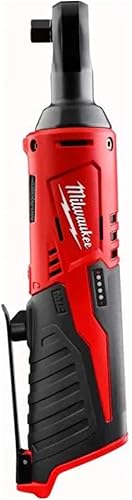
Both are 3/8-inch M12 cordless ratchets with 35 ft-lb of torque and 250 RPM. They share the main job-focused features that matter in a tight engine bay, including a low-profile head design, variable-speed control, onboard fuel information and LED lighting.
The real difference in the Milwaukee 2457-20 vs 2457-21 decision is what comes in the box. The 2457-20 gives you the ratchet alone, while the 2457-21 adds the battery, charger and case.

Milwaukee 2457-20 vs 2457-21: what is the quick answer?
Pick the 2457-21 for a complete cordless setup, and pick the 2457-20 for an existing M12 battery system. Both models deliver the same listed torque and speed, so the kit contents decide the overall winner for most shoppers.
The 2457-21 earns the higher score here because it solves more of the setup problem in one purchase. Its kit includes one M12 lithium-ion battery, a 30-minute charger and a carrying case.
The 2457-20 earns the higher value for an M12 owner who already has the battery and charger. Buying another kit would add items you may not need, while the tool-only package keeps the focus on the ratchet itself.
This comparison is based on the supplied product specifications and features. We did not treat the 2 model numbers as different performance classes, because both are listed with 35 ft-lb torque and 250 RPM.
How do the 2457-20 and 2457-21 compare side by side?
The core ratchet performance is closely matched, but the 2457-21 includes the parts needed to start using it. The table makes the package difference easier to see.
| Feature | Milwaukee 2457-20 | Milwaukee 2457-21 |
|---|---|---|
| Product type | M12 cordless 3/8-inch ratchet | M12 cordless 3/8-inch ratchet kit |
| Torque | 35 ft-lb | 35 ft-lb |
| Speed | 250 RPM | 250 RPM |
| Drive size | 3/8 inch | 3/8 inch |
| Power setup | Battery not included | One M12 lithium-ion battery included |
| Charger | Not included | 30-minute charger included |
| Carrying case | Not included | Included |
| Length | 9.47 inches in the specifications | 10.1 inches |
| Weight | 16 ounces in the specifications | 1.9 pounds |
| Best fit | Existing M12 owners | New M12 ratchet buyers |
The length and weight entries use the product data for each package. The 2457-20 specifications list 9.47 inches and 16 ounces, while the 2457-21 specifications list 10.1 inches and 1.9 pounds.
Those figures should not be used as a promise that one will feel better in every hand. Grip, access angle and the space around the fastener still shape how easy a ratchet is to position.
Which one gives you more useful power?
Neither model wins on motor output because both are rated for 35 ft-lb and 250 RPM. That makes the choice about how you want to supply power, not how much listed power the ratchet produces.
The 35 ft-lb rating describes the torque available from the 12-volt motor. For a cordless ratchet, that gives you a clear way to compare these 2 models with each other.
The 250 RPM figure describes the maximum rotational speed shown for the tools. A variable-speed trigger lets you control the speed instead of treating every fastening task as an all-or-nothing movement.
That control matters when a fastener is close to threads, nearby parts or a surface that you do not want to strike. Start with a controlled trigger pull, then increase speed when the socket and fastener are correctly aligned.
A ratchet is also not a replacement for careful final tightening. Use the tool for access and speed, then use the correct hand tool or torque method when the job requires a specific final torque.
Which battery setup is better?
The 2457-21 is the clear winner if you need a battery and charger. The 2457-20 is the smarter package when an M12 battery is already part of your tool setup.
The 2457-20 is labeled as a power-tool-only product. Its operation mode is battery, but the battery is not included, so the tool does not become a ready-to-use cordless kit by itself.
The 2457-21 includes one M12 lithium-ion battery and a 30-minute charger. That removes 2 separate buying decisions and gives a new user a defined starting point.
The kit also includes a carrying case. A case can help keep the ratchet, battery and charger together between jobs, especially if the tool moves between a garage, workshop and vehicle.
The tool-only route still makes sense when you already use M12 equipment. You can keep your existing battery workflow and avoid buying a second charger for a ratchet that has the same listed power as the kit version.
If you are comparing the 2457-20 with other tools in the same battery family, our Milwaukee M12 ratchet review gives you a wider look at this ratchet type.
Which model is easier to use in tight spaces?
The 2457-20 is the better match for readers focused on tight engine-bay access because its data highlights a 3/4-inch low-profile head design. The 2457-21 is based on the same 3/8-inch M12 ratchet format, so the package difference remains its main advantage.
A low-profile head can make the difference between reaching a fastener and being blocked by nearby parts. The useful question is not only whether the tool fits the opening, but also whether you can keep the socket straight while operating the trigger.
The product information also calls out a recessed forward-backward switch on the back of the 2457-20 head. That placement is intended to reduce accidental direction changes during work.
Both descriptions include a variable-speed trigger. Use a light pull for initial engagement, then increase speed once the socket is seated and the fastener is moving smoothly.
The 2457-20 also has LED lighting on the front. That helps illuminate the work area in dim conditions, though it does not replace a clear view of the socket and fastener.
The tool's low-profile design does not eliminate the need to choose the right socket and approach angle. A compact ratchet still needs enough room for your hand and enough clearance to move the head through its working arc.
What do the fuel gauge and control features change?
The onboard fuel gauge makes battery planning easier, while the variable-speed trigger gives you more control over the fastening process. These features are useful on both short repairs and longer maintenance sessions.
The 2457-20 has lights on the side that show how much power remains. The 2457-21 also lists an onboard fuel gauge that helps you monitor charge.
That information can help you decide when to change batteries instead of stopping unexpectedly in the middle of a task. It is especially useful when the ratchet is used away from a charger.
The 2457-20 description also names REDLINK intelligence. Its smart chip communicates with the M12 battery and helps prevent too much power and overheating.
The 2457-21 lists reinforced metal housing and a reinforced trigger. The 2457-20 data also describes reinforced steel housing and a variable-speed metal trigger.
These details point to a tool intended for repeated shop and maintenance work, but they do not remove normal care. Keep the tool clean, use the correct socket and store the battery and charger as directed for their equipment.
Who should buy the Milwaukee 2457-20?
Buy the Milwaukee 2457-20 if you already have an M12 battery and want a compact tool-only ratchet. It is the better match for an existing M12 owner who values the low-profile head and does not need a second charger or carrying case.
The 2457-20 has a 3/8-inch socket end, 35 ft-lb of torque and 250 RPM speed. Its 9.47-inch length in the specifications and 16-ounce listed weight support a portable tool role.
The low-profile head is the main reason to focus on this model for crowded work areas. The LED light, recessed direction switch, fuel gauge and variable-speed trigger add useful control around fasteners.
This is also the better choice for building a focused tool collection. You can add the ratchet without adding another battery and charger to a shelf that already holds M12 equipment.
The trade-off is simple: the tool does not include the power source. If you do not already have an M12 battery, the purchase does not give you a complete working setup.
Use the tool for controlled fastening and access work. Keep your socket fully seated, use the correct direction setting, and switch to the appropriate hand tool when the final tightening method calls for it.
Who should buy the Milwaukee 2457-21?
Buy the Milwaukee 2457-21 if this is your first M12 ratchet purchase or you want everything together in one kit. Its higher score reflects the battery, charger and carrying case included with the same 35 ft-lb, 250 RPM ratchet format.
The kit includes one M12 lithium-ion battery, a 30-minute charger, a carrying case and the ratchet. That makes the 2457-21 the easier recommendation for a buyer starting without an M12 battery.
Its 10.1-inch listed length and 1.9-pound listed weight still place it in a portable cordless tool category. The 3/8-inch drive, variable-speed trigger, LED light and 250 RPM speed suit common repair and maintenance tasks that benefit from cordless access.
The main trade-off is package overlap for an existing M12 owner. If you already have a charger, battery and storage solution, the kit can duplicate items you already own.
The 2457-21 also makes sense as a gift or a single-box workshop addition. The carrying case keeps the main pieces together, while the included charger creates a clear charging routine.
Before starting a job, install the battery, select the correct direction and seat the socket fully. Use the trigger gradually so the ratchet starts under control rather than at its maximum speed.
How should you choose between tool-only and kit?
Choose by the battery items already in your workshop, then compare the physical access needs of the job. The 2457-20 is the existing-system choice, while the 2457-21 is the ready-to-start choice.
Make a short inventory before deciding. If you have an M12 battery and charger that you already use, the 2457-20 gives you the ratchet without repeating those purchases.
If you have no M12 battery, the 2457-21 gives you the battery and 30-minute charger in the same kit. Its carrying case also gives the package a defined storage place.
Next, think about where the tool will work. A ratchet with a low-profile head helps in tight spaces, but the socket, hand position and direction of movement still matter.
Then consider how often the tool will move between locations. The kit's carrying case favors a mobile setup, while the tool-only package suits a workshop where batteries and storage are already organized.
For broader M12 tool planning, our Milwaukee M12 vs M18 grease gun comparison explains how battery platform decisions can affect the rest of a cordless tool collection. If you are comparing related Milwaukee ratchet formats, see our Milwaukee insider ratchet reviews next.
How should you use and care for either ratchet?
Use either ratchet with the socket fully seated, the direction selected before operation and the trigger controlled around the fastener. Basic handling keeps the shared motor, head and control features working as intended.
Start by choosing a 3/8-inch socket that fits the fastener correctly. Hold the ratchet so the head stays aligned with the fastener, especially when working around crowded engine-bay parts.
Use a slow trigger pull for the first movement. The variable-speed trigger lets you keep the tool calmer while the socket engages, then increase speed when the fastener is turning freely.
Keep fingers clear of the moving socket area. Do not force the tool through a bind or use an unsuitable accessory to make a socket fit.
The LED light helps in dim work areas, but it does not replace safe positioning. Keep the work area clear enough to see the socket, direction switch and surrounding parts.
Use the fuel gauge to plan charging. Store the ratchet with the battery handled according to its equipment instructions, and keep the charger and case together if you choose the 2457-21 kit.
For related maintenance equipment, our Milwaukee M12 grease gun review covers another cordless tool built around the M12 platform.
Milwaukee 2457-20 vs 2457-21: which one should you buy?
The Milwaukee 2457-21 is the overall winner for most readers because it includes the battery, 30-minute charger and carrying case. Its 35 ft-lb torque and 250 RPM speed match the 2457-20, so the complete kit gives new buyers the easier path.
Choose the Milwaukee 2457-20 when you already own an M12 battery and charger, want the tool-only package, or care most about adding a compact 3/8-inch ratchet without duplicating accessories.
Choose the Milwaukee 2457-21 when you are starting an M12 setup, need a battery immediately, or want one package that includes charging and storage.
The performance decision is close because both models share the same listed torque and speed. The buying decision is not close for a first-time buyer: the 2457-21 includes the pieces needed to begin using the ratchet.
That makes the final rule straightforward. Pick the 2457-21 for the complete setup, and pick the 2457-20 for an existing M12 workshop.
Frequently asked questions
Are the Milwaukee 2457-20 and 2457-21 the same ratchet?
They are closely related 3/8-inch M12 ratchets with 35 ft-lb torque and 250 RPM speed. The main buying difference is the package: the 2457-20 is tool-only, while the 2457-21 includes one M12 battery, a 30-minute charger and a carrying case.
Does the Milwaukee 2457-20 include a battery?
No. The Milwaukee 2457-20 is a power-tool-only package, so you need an M12 battery for cordless operation.
That makes it the better fit for someone who already owns the battery system and does not need another charger or case.
Which Milwaukee M12 ratchet is better for a first-time buyer?
The Milwaukee 2457-21 is better for a first-time buyer because its kit includes the ratchet, one M12 battery, a 30-minute charger and a carrying case. You get the complete cordless setup in one package instead of adding the battery separately.
Do both Milwaukee ratchets have the same torque and speed?
Yes. Both models are built around 35 ft-lb of torque and 250 RPM speed.
The choice is therefore about the included power setup, package size and buying situation rather than a different motor rating.
Which ratchet is better for tight engine bays?
The Milwaukee 2457-20 is a strong choice for tight engine-bay work because its product information highlights a 3/4-inch low-profile head design. The 2457-21 uses the same M12 ratchet design, so its main advantage is the included kit.