Cordless Ratchet vs Impact Driver: Which Fits the Job? (November 2026)
Choose a cordless ratchet for socket fasteners and an impact driver for screws and compatible bits. In the cordless ratchet vs impact driver choice, match the tool to the fastener and the space you need to reach.
On this page (9 sections)
- Cordless ratchet vs impact driver: what is the main difference?
- Which tool is better for screws and bits?
- How do control and access compare?
- Does an impact driver replace a cordless ratchet for bolts?
- Which cordless ratchet features matter for your work?
- How do you set up and care for either tool?
- What mistakes should you avoid?
- Which should you choose for the job?
- Frequently asked questions
Choose a cordless ratchet for socket work in tight spaces and an impact driver for screws and compatible bits. In a cordless ratchet vs impact driver choice, the fastener's drive type matters more than the fact that both tools run on batteries.
A ratchet turns a socket on nuts and bolts. An impact driver holds a hex-shank bit for tasks such as driving screws, and it can turn some sockets with a suitable impact-rated adapter.
The tools overlap only when the accessory and fastener fit the job. For routine automotive socket work, a cordless ratchet is usually easier to position; for building and repair jobs with screws, an impact driver is the more direct choice.
 Best for higher torque needs
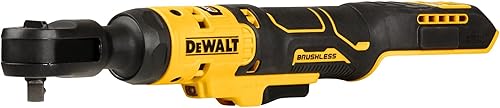
DeWalt DCF513B 20V ATOMIC 3/8-inch Ratchet
Cordless ratchet vs impact driver: what is the main difference?
A cordless ratchet turns socket fasteners, while an impact driver turns driver bits. Their heads and accessories are built around different connections.
A cordless ratchet has a square drive for a socket. The head moves the socket around the fastener, which helps when you need to work between hoses, panels or other parts.
An impact driver usually has a hex collet that accepts driver bits. Its impact action helps drive screws and other compatible fasteners, but its bit holder doesn't provide the same direct socket setup as a ratchet.
You can add an impact-rated socket adapter to an impact driver, but that adds length and another connection. Use accessories designed for impact tools, and follow the tool and accessory makers' instructions for the fastener and application.
Which one fits automotive work?
A cordless ratchet usually fits routine automotive nut-and-bolt work better because it accepts sockets directly. Its head can be easier to place than a driver plus a socket adapter.
The electric ratchet wrench guide explains what these tools do and what to consider before choosing one. If access around engine parts is your main concern, compare our compact cordless ratchet picks.
An impact driver can still help with vehicle accessories that use compatible screws. Keep it for those jobs and use a socket tool for nuts and bolts that need a socket.
Which tool suits a home repair toolbox?
An impact driver is a practical fit if most of your projects involve screws, such as fastening compatible hardware or assembling wood projects. The bit holder makes it straightforward to swap among driver bits suited to different screw heads.
A cordless ratchet makes more sense if you regularly service equipment or tackle jobs with nuts and bolts. If both types of work come up, start with the tool that matches your most common task and borrow or buy the other when that work becomes regular.
Which tool is better for screws and bits?
An impact driver is the better fit for driving screws and compatible hex bits. Its bit holder is designed for that connection, while a cordless ratchet needs an adapter and isn't built around driver bits.
Choose an impact driver for repeated screw driving. Match the bit to the screw head, keep the tool aligned, and follow the tool maker's guidance for the fastener and material.
A ratchet can turn a bolt with a socket, but that doesn't make it a convenient screwdriver. Adapters can add length and make a setup awkward, especially in a crowded work area.
Think about what you change most often. If you typically reach for sockets, choose the ratchet; if you typically reach for driver bits, choose the impact driver.
How do control and access compare?
A cordless ratchet gives direct socket access, while an impact driver gives a direct bit connection for screw work. Either tool can be difficult to use if its head, battery or accessory can't fit the work area.
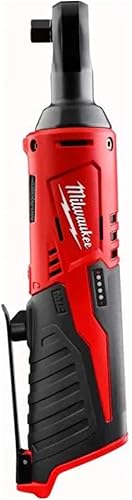
A low-profile ratchet head can help in a cramped engine bay. The Milwaukee 2457-20 has a variable speed trigger, LED lighting and an onboard fuel gauge, and it requires a separately sold M12 battery.
The DeWalt DCF513B also has a compact design and low-profile head. Its 70 ft-lb torque and variable speed trigger may suit someone who wants a 3/8 in cordless ratchet with higher stated torque.
An impact driver's short bit connection can be handy when a screw sits in an open or shallow spot. The tool body still needs room to line up with the screw, and a longer bit changes how far the tip reaches.
Before buying either tool, measure the opening and consider the space your hand needs. Include the battery, socket or bit, and room to keep the tool aligned.
Does an impact driver replace a cordless ratchet for bolts?
An impact driver can turn some socket fasteners with an impact-rated adapter, but a cordless ratchet is the simpler socket tool. The adapter adds length without changing the driver's main purpose.
Use an impact-rated adapter and socket when their makers approve that combination. Don't assume a regular socket or extension can handle impact use.
A cordless ratchet suits running nuts and bolts with sockets, especially when space makes a hand ratchet slow to reposition. It doesn't replace a hand ratchet or torque wrench at every stage of a repair.
If the job specifies final torque, use a suitable torque wrench and the vehicle or equipment service instructions. A cordless ratchet's maximum torque figure isn't a precision setting.
Which cordless ratchet features matter for your work?
Choose a ratchet by drive size, head access, trigger control and battery platform. Those details determine whether it fits the sockets you own and the spaces where you'll use it.
What drive size should you choose?
A 3/8 in drive can suit common automotive and home repair sockets. A 1/4 in drive fits smaller sockets, while 1/2 in sockets suit larger fasteners when the tool and job call for them.
The Craftsman V20 Multi-Size Ratchet includes interchangeable 1/4, 3/8 and 1/2 in anvils. It has up to 40 ft-lb of torque and reaches up to 300 RPM, with the battery and charger sold separately.
For more on drive sizes and use cases, compare the best 3/8 in cordless ratchets and best 1/4 in cordless ratchets.
How much torque and speed do you need?
A higher torque figure can help when a tool has to turn a more resistant fastener, but it doesn't determine whether the tool will fit or whether the fastener is safe to loosen that way. Stuck, corroded or delicate fasteners may call for a different method.
Speed matters when you need to run down several fasteners. The variable speed triggers on these ratchets let you control tool speed, but ease off near the end of a fastening task to keep the fastener under control.
Battery and charger availability also affects the cost and convenience of a tool. These three ratchets are sold as tool-only, so check whether you already own a compatible battery platform before choosing one.
Who should skip a cordless ratchet?
Skip a cordless ratchet if nearly all your jobs involve screws, or if you rarely use sockets. An impact driver or a manual tool may be a better fit for that work.
Also think twice if you need a tool for a specified final torque or expect it to free every stuck fastener. Use the correct hand tool or torque wrench for those steps, following the equipment's service instructions.
How do you set up and care for either tool?
Start with a charged, compatible battery and a correctly fitted accessory. A few checks before the trigger is pressed can prevent damage to the fastener, tool or workpiece.
- Read the tool manual and check the direction setting before approaching the fastener.
- For a ratchet, seat the socket fully on the square drive and fastener. For an impact driver, make sure the bit locks into the collet and matches the screw head.
- Set the workpiece securely, keep the tool aligned, and begin with light trigger pressure.
- Stop if the socket slips, the bit cams out, or the fastener starts to move in an unexpected direction.
Remove the battery before changing accessories or inspecting the tool. Keep the tool and its vents clear of debris, and wipe away dirt or residue after use.
Store bits, sockets and batteries dry, and replace worn or damaged accessories. For cordless ratchets used around automotive fluids, follow the manual's cleaning advice; don't assume a housing is resistant to every chemical.
What mistakes should you avoid?
The main mistake is choosing by power alone instead of matching the drive, accessory and fastener. A higher torque number can't compensate for poor access or an incompatible connection.
Don't use a regular socket adapter on an impact driver unless its maker approves it for impact loads. The wrong accessory can fail under repeated impact.
Don't force a ratchet or impact driver into a space where you can't keep it aligned. A hand ratchet may be safer when you need careful placement or very little clearance.
Don't use motor torque as a final torque measurement. For a specified value, finish with a suitable torque wrench and the applicable service instructions.
Which should you choose for the job?
Pick a cordless ratchet for frequent socket work and an impact driver for frequent screw driving. If you do both, buy for the task you face most often, then add the other when it will get regular use.
Choose a cordless ratchet if you work on automotive or equipment fasteners, already own sockets, or need to run nuts and bolts in a confined space. Match the drive size to your sockets, check head clearance and confirm that you have a compatible battery.
Choose an impact driver if most of your work involves screws and compatible hex bits. Use impact-rated socket accessories only for occasional socket jobs when the accessory maker approves that setup.
For a related tool comparison, read electric ratchet vs drill. If a cordless ratchet is the better match, compare the Craftsman V20 multi-size option for its interchangeable anvils.
Frequently asked questions
Can a cordless ratchet replace an impact driver?
A cordless ratchet handles socket fasteners, but it doesn't replace an impact driver for screws and compatible driver bits. Choose by the fastener's drive type and the work you do most.
For automotive nuts and bolts, a ratchet with the right socket is usually the more direct fit.
Can an impact driver loosen nuts and bolts?
An impact driver can turn some fasteners with a suitable impact-rated socket adapter and socket, but its main interface is a hex bit holder. Use accessories approved for impact tools and check their fit and limits.
An ordinary socket adapter may not be safe for impact loads.
Which tool is better for working in an engine bay?
A cordless ratchet usually suits engine-bay socket work because it accepts the socket directly. A low-profile head can help around nearby parts, but measure the opening and account for your hand, battery and socket before choosing.
Should you use a cordless ratchet to tighten fasteners?
Use a cordless ratchet to run down a compatible fastener, then use a suitable torque wrench when the job specifies a final torque. A ratchet's motor torque figure isn't a controlled final tightening method.
Follow the service instructions for the vehicle or equipment.
Is an impact driver the same as an impact wrench?
No. An impact driver generally accepts hex-shank driver bits, while an impact wrench is made for sockets and larger fasteners.
Their drive interfaces and intended jobs differ, so check that the tool and accessory fit before use.
Frequently asked questions
Can a cordless ratchet replace an impact driver?
A cordless ratchet handles socket fasteners, but it doesn't replace an impact driver for screws and compatible driver bits. Choose by the fastener's drive type and the work you do most.
For automotive nuts and bolts, a ratchet with the right socket is usually the direct fit.
Can an impact driver loosen nuts and bolts?
An impact driver can turn some fasteners with a suitable impact-rated socket adapter and socket, but its main interface is a hex bit holder. Use accessories approved for impact tools and check their fit and limits.
An ordinary socket adapter may not be safe for impact loads.
Which tool is better for working in an engine bay?
A cordless ratchet usually suits engine-bay socket work because it accepts the socket directly. A low-profile head can help around nearby parts, but measure the opening and account for your hand, battery and socket before choosing.
Should you use a cordless ratchet to tighten fasteners?
Use a cordless ratchet to run down a compatible fastener, then use a suitable torque wrench when the job specifies a final torque. A ratchet's motor torque figure isn't a controlled final tightening method.
Follow the service instructions for the vehicle or equipment.
Is an impact driver the same as an impact wrench?
No. An impact driver generally accepts hex-shank driver bits, while an impact wrench is made for sockets and larger fasteners.
Their drive interfaces and intended jobs differ, so check that the tool and accessory fit before use.


